How Gold Rates Are Set by the Sarafa Association in Pakistan
Quick Answer
Gold rates in Pakistan are not fixed by the government or the State Bank of Pakistan. They are announced daily — usually more than once a day — by the All Pakistan Sarafa Gems & Jewellers Association (APSGJA), a Karachi-based trade body. The association converts the international spot price of gold (quoted in US dollars per troy ounce on global bullion markets) into rupees using the prevailing USD/PKR exchange rate, adjusts the figure for the tola unit, and layers on a local premium that reflects import costs, duties, and city-level demand. Other city associations — including those in Lahore, Rawalpindi, and Peshawar — then align their own posted rate to this Karachi benchmark, typically within a short window of the announcement.
Who Sets the Gold Rate in Pakistan?
Unlike countries with a centralized gold exchange, Pakistan has no single government-run bullion price authority. Gold pricing is instead set by a private trade body: the All Pakistan Sarafa Gems & Jewellers Association (APSGJA), based on Zaibunnisa Street in Karachi’s Sadar area — the historic center of the country’s bullion trade.
This is a trade association of bullion dealers and jewellers, not a government regulator. Its daily benchmark functions as the de facto national reference price — the figure newspapers, TV channels, and gold-tracking sites report as “today’s gold rate in Pakistan.“
Karachi’s role as the reference point comes down to trade geography: it’s Pakistan’s main gold-import hub, so its dealers have the earliest read on landed gold costs. Associations in other cities generally use the Karachi rate as their pricing baseline rather than calculating an independent figure — this appears to be standard industry practice, though the degree of coordination can vary by city and by day.
The Local Association Network
Karachi has several registered sarafa and jewellers associations spread across neighborhoods including Mithadar (the main one, based at Gold House on Abdullah Street), Paposhnagar, New Karachi, Korangi, Malir, Ranchor Line, Kemari, Saddar, and Babar Market. Nationally, local bodies operate under umbrella organizations such as the state-backed Pakistan Gems and Jewellery Development Company (PGJDC), which maintains a public directory of affiliated associations. The Lahore Division Sarafa and Jewellers Association (LDSJA), founded in 1957 by Haji Manzoor Ahmad, is one of the larger regional bodies and says it now represents over 50 affiliated associations across the Lahore division.
The Formula: How the Rate Is Calculated
The Sarafa rate follows a repeatable, publicly described calculation with three core inputs, though the association does not publish an official formula document — the mechanics below are how multiple gold-rate trackers and Pakistani business press describe the process.
Simplified formula:
(International gold price per troy ounce × USD/PKR exchange rate × 11.6638 ÷ 31.1035) + local premium = Sarafa rate per tola
What each part means:
- International spot price. Gold trades globally in US dollars per troy ounce, benchmarked against reference prices such as LBMA (London Bullion Market Association) and COMEX futures. When this global price moves — on inflation data, central bank policy, or geopolitical developments — Pakistan’s local rate tends to follow, often within the same trading day.
- The USD/PKR exchange rate. Pakistan imports the large majority of the gold it uses, since domestic mining output is minimal. Because of this, the rupee’s value against the dollar directly scales the local price — even when international gold is flat, a weakening rupee alone can push the per-tola rate higher.
- Unit conversion. International markets quote gold per troy ounce (31.1035 grams). Pakistan trades gold by the tola, a traditional South Asian weight unit equal to 11.6638 grams. Converting the ounce price into a tola price is part of the daily calculation.
- The local premium. On top of the converted international price, dealers add a premium that reflects customs duties, import costs, and local supply-and-demand conditions. Unlike the spot price and exchange rate, this premium is not a single published figure — it’s effectively the market-observed gap between the international parity price and the rate dealers post, and it can widen during high-demand periods such as Pakistan’s wedding season (roughly October to March), when jewellery buying picks up.
Because the spot price and exchange rate move independently and continuously, the Karachi rate can be revised more than once in a single day. Industry reporting generally describes at least one update per business day as the norm, with more frequent revisions during volatile sessions.
When and How the Rate Gets Announced
Small, temporary rate differences between cities on the same day are generally attributed to transport cost from Karachi, local demand intensity, and how quickly a given bazaar updates its board — rather than genuinely independent pricing.
What the Sarafa Rate Does — and Doesn’t — Include
A common point of confusion: the “Sarafa rate” quoted in the news is a wholesale bullion price, not the final price you’ll pay at a jewellery counter.
What the Sarafa Rate Does — and Doesn’t — Include
Figures above are commonly cited industry ranges, not officially fixed rates — actual charges vary by jeweller and current FBR rules.
Because gold and jewellery tax treatment in Pakistan has changed more than once in recent years — including a 2024 episode where a sales tax exemption on gold imports was briefly lifted without prior notice, halting formal imports until it was restored — readers should treat any specific tax percentage as a snapshot rather than a permanent rule, and check the current FBR notification for their transaction type.
Quick Answer
Karat Purity Matters Too
The Sarafa Association’s headline rate is normally quoted for 24-karat (99.9% pure) gold — the investment-grade standard used for bars and coins. Jewellery is rarely sold at 24K because pure gold is too soft for daily wear, so retail rates are commonly quoted across four karats:
- 24K (99.9% pure): Investment-grade gold, bars and coins
- 22K (91.6% pure): The traditional standard for wedding and fine jewellery in Pakistan
- 21K (87.5% pure): A common karat for everyday jewellery, balancing purity with durability
- 18K (75% pure): Preferred for intricate, modern designer jewellery, since the added alloy improves wear resistance
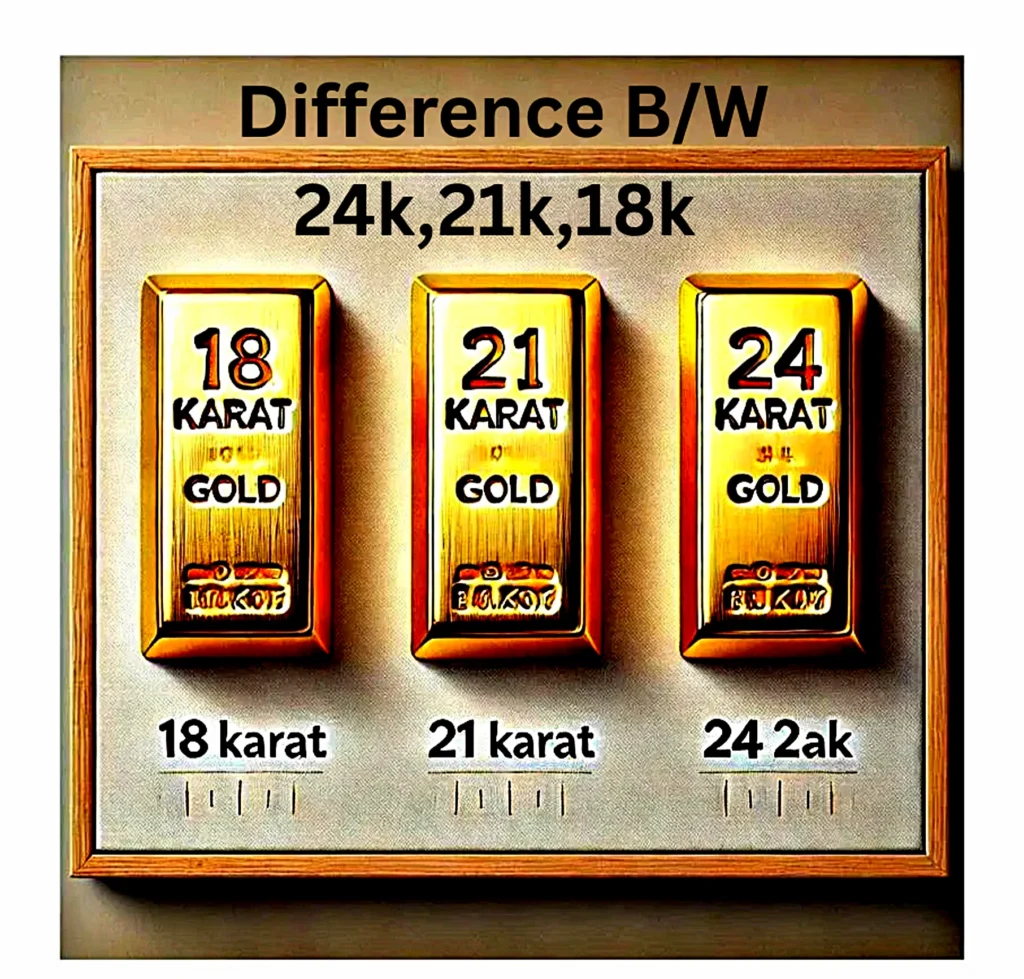
Each lower karat is priced as a proportional fraction of the 24K bullion rate, adjusted for alloy composition.
Why This System Exists (And Its Limits)
Pakistan’s reliance on a trade-association benchmark rather than a government-run exchange reflects the bullion trade’s long history in cities like Karachi and Lahore, where sarafa bazaars have operated as largely self-regulating markets for decades — the Lahore association, for instance, traces its founding to 1957.
This system has some notable friction points:
- No centralized exchange for retail gold. Because the rate is set by an industry association rather than a regulator, short-lived discrepancies between cities — and even between shops in the same bazaar — can occur.
- Import policy shocks. Sudden regulatory changes, such as the 2024 suspension of a gold-import sales tax exemption, can disrupt supply and ripple into local premiums.
- A parallel, regulated alternative exists. The Pakistan Mercantile Exchange (PMEX), Pakistan’s only SECP-regulated commodity futures exchange, has offered gold futures contracts since it began full operations in 2007. PMEX provides an electronically traded, regulated price-discovery mechanism, but it serves traders and hedgers rather than everyday retail jewellery buyers.
Sources & Further Reading
This article draws on reporting and public information from: Business Recorder’s Sarafa Association coverage; Dawn Business’s reporting on the 2024 gold-import sales tax exemption reversal; PKRevenue’s coverage of the FBR Tax Expenditure Report; TaxationPk’s overview of gold and precious metals taxation in Pakistan; ettc.pk’s summary of current FBR sales tax rules; the Pakistan Gems and Jewellery Development Company’s local associations directory; the Lahore Division Sarafa and Jewellers Association; the Pakistan Mercantile Exchange and its public records; Profee’s guide to finding reliable gold prices for Pakistan; and multiple Pakistan gold-rate tracking sites (Oraan, TodayGoldRate.pk, GoldRatesPakistan.com, GoldRateInPakistanToday.pk) that publish Sarafa-sourced daily rates.
This article is for informational purposes only and does not constitute financial, investment, or tax advice. Gold rates change frequently and tax treatment is subject to revision — always confirm the current rate with a local Sarafa dealer and verify tax details against the latest FBR notification before a transaction.
Frequently Asked Questions
No. It is announced daily by the All Pakistan Sarafa Gems & Jewellers Association, a private trade body — not by the State Bank of Pakistan or any government agency.
Because it tracks two moving inputs — the international spot price of gold and the USD/PKR exchange rate. When either moves meaningfully during the trading day, the Sarafa Association can revise its rate.
Cities generally follow the Karachi benchmark, but small, temporary gaps can appear due to transport costs from Karachi, local demand levels, and how quickly each city’s association updates its board.
No. The published rate is the wholesale bullion value. Retail jewellers add making charges (ujrat) — commonly cited at 15–25% for jewellery and 1–3% for bars — plus applicable sales tax and duties, on top of the base rate. Exact tax treatment depends on current FBR rules, which have changed more than once in recent years.
A tola is a traditional South Asian weight unit equal to 11.6638 grams. It’s the standard pricing unit in Pakistan’s bullion markets, while international markets price gold per troy ounce (31.1035 grams).
Yes. The Pakistan Mercantile Exchange (PMEX) offers SECP-regulated gold futures contracts with electronic price discovery, though it’s used mainly by traders and hedgers rather than retail jewellery buyers.
So, Who Really Decides the Gold Rate in Pakistan?
Not the government, and not the State Bank — it’s the All Pakistan Sarafa Gems & Jewellers Association, working off the international spot price and the USD/PKR exchange rate to set the benchmark that every city bazaar in the country follows. That’s really the answer to how the gold price is decided in Pakistan: two moving global inputs, converted into rupees, with a local premium layered on top for import costs and demand.
It’s also the answer to who decides the daily price of gold more broadly — the same trade body issues a fresh rate each trading day, and revises it again whenever the spot price or the exchange rate moves enough to justify an update. That’s why the number on your screen at 10 AM isn’t always the number you’ll see by evening.
As for whether the gold rate will decrease in the coming days in 2026 — that depends entirely on the same two forces driving the whole system: where international gold heads next on global markets, and whether the rupee holds steady or weakens against the dollar. Neither is something the Sarafa Association controls; it only reports what those forces produce.