Live Gold Price Today – 24K, 22K, 21K, 18K Per Gram, Ounce & Tola
Live Price Of Gold delivers real-time gold rate updates refreshed every second, covering per ounce, per tola, per gram, and per 10-gram measurements across the world’s major gold-consuming and trading countries. This page shows one live gold spot price, converted into your local currency and unit. It covers 24K, 22K, 21K, and 18K side by side, in gram, ounce, and tola, for markets across Asia, the Gulf, and the West. Use the table below for the live price of gold per gram, or switch units for the international gold rate live in 24 carat, converted straight into your currency.
Live Price of Gold
Track and observe real-time global gold prices based on live market data from Forex market. Spot prices only. No dealer margins, labour costs, or retail premiums.
Gold Prices by Weight and Purity
The platform pulls directly from live bullion market data, meaning prices move in sync with international trading activity rather than relying on delayed or once-daily updates common on many competing sites. This second-by-second refresh matters most to active buyers, jewellers, and traders who need to act on price movements as they happen, not hours after the market has already shifted.
Coverage spans a wide range of currencies and regions, so a user checking rates in Pakistani rupees, Indian rupees, UAE dirhams, Saudi riyals, or any other supported local currency sees pricing calculated from the same underlying international gold benchmark, adjusted for that currency’s live exchange rate. This removes the guesswork of manually converting ounce-based dollar prices into local weight units and local money.
For anyone tracking gold as an investment, a hedge, or a purchase decision, having live, multi-currency, multi-unit pricing in one place turns a normally fragmented research process — checking one site for spot price, another for currency conversion, a third for local unit pricing — into a single, immediate answer.
Gold Rate Calculator Live
A gold rate calculator helps you check the latest gold price in every country in a simple way. You do not need to calculate the value manually. You only enter the gold weight, choose the unit, purity like 24K or 22K etc and the calculator shows the estimated price in local currencies like dollar,pound,euro,rial,rupees etc.
Why Gold Rate Calculators Are Useful
Gold prices change many times because of the international gold market, currency exchange rates, local demand, and bullion trading. This is why buyers and sellers need a quick tool to check the current value before making a deal.
Global Bullion Market Overview
The international bullion market includes not only gold but also other precious metals such as silver, platinum, and palladium. Gold remains one of the most watched assets because it is widely seen as a store of value during uncertain economic conditions. Market participants closely monitor gold pricing to understand inflation trends, currency weakness, geopolitical uncertainty, and investor sentiment across the global economy.
Gold Rates in Different International Currencies
Although gold is primarily priced in US dollars, international rates are also converted into major world currencies for convenience. This allows buyers and investors in different countries to track the metal’s value in their local currency. Gold prices are commonly viewed in Euro, British Pound, UAE Dirham, Saudi Riyal, Japanese Yen, Chinese Yuan, and Pakistani Rupee, helping users compare global pricing across markets.
Factors That Affect International Gold Prices
Several factors influence international gold prices in real time. Currency exchange fluctuations, especially the strength of the US dollar, can directly impact gold valuation. Inflation concerns often increase gold demand as investors seek protection against declining purchasing power. Central bank activity, global economic slowdowns, market uncertainty, and supply-demand conditions in the bullion market also play a major role in price movement.
International Gold Price Changes
The biggest reason behind gold price changes in every country is the international gold rate.
Gold is usually priced globally in US dollars per troy ounce. When the global gold price rises, local gold rates usually rise too. When the global price falls, local rates may also fall.
International gold prices react to many things, such as:
For example, recent gold market reports show that gold prices can move quickly when traders react to Middle East tensions, oil prices, inflation concerns, and Federal Reserve interest-rate expectations.
Simple Example
Several factors influence international gold prices in real time. Currency exchange fluctuations, especially the strength of the US dollar, can directly impact gold valuation. Inflation concerns often increase gold demand as investors seek protection against declining purchasing power. Central bank activity, global economic slowdowns, market uncertainty, and supply-demand conditions in the bullion market also play a major rol
If the international gold price rises from $4,500 to $4,550 per ounce, local gold sellers adjust their rates.
But they do not only look at the international price. They also look at the dollar rate in Pakistan.
That brings us to the next big reason.
Global News and Political Tension
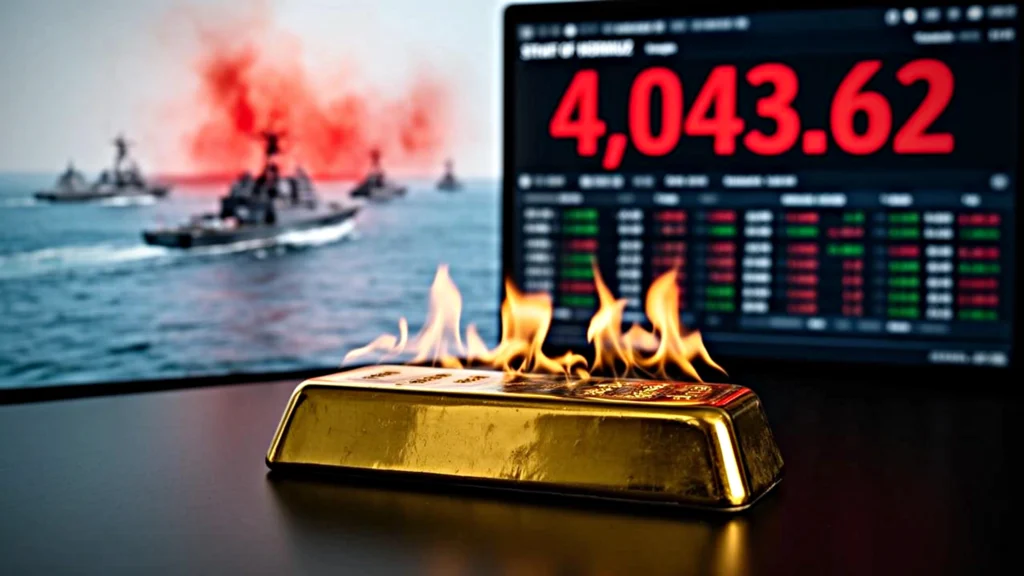
Gold is often called a safe-haven asset.
This means people may buy gold when they feel worried about the economy, war, inflation, banking problems, or currency weakness.
When global tension increases, gold demand can rise.
For example, news about conflict, oil prices, and inflation expectations can cause gold to move within hours. Reuters recently reported that gold prices moved as traders reacted to Middle East tensions, oil prices, the dollar, and US interest-rate expectations.
This global movement quickly reaches gold market.
So, if you see gold prices changing suddenly, check the global news. There may be a reason behind it.
Inflation and Interest Rates
Inflation also affects gold prices.
When inflation is high, people often buy gold to protect their money. They feel gold may hold value better than cash.
But interest rates can also affect gold.
Gold does not pay profit or interest. So, when interest rates are high, some investors may prefer interest-paying assets. When interest rates are expected to fall, gold can become more attractive.
This is why gold often reacts to US Federal Reserve news, inflation data, and central bank policy.
Local currency movement
For any given country, the domestic gold price also depends entirely on how that currency is performing against the dollar. A weakening local currency can push domestic gold prices higher even on a day the international dollar price is flat or falling — which is why gold is widely used as a currency hedge in economies with higher inflation or currency volatility.
Difference Between 24K, 22K, and 21K Gold Rates
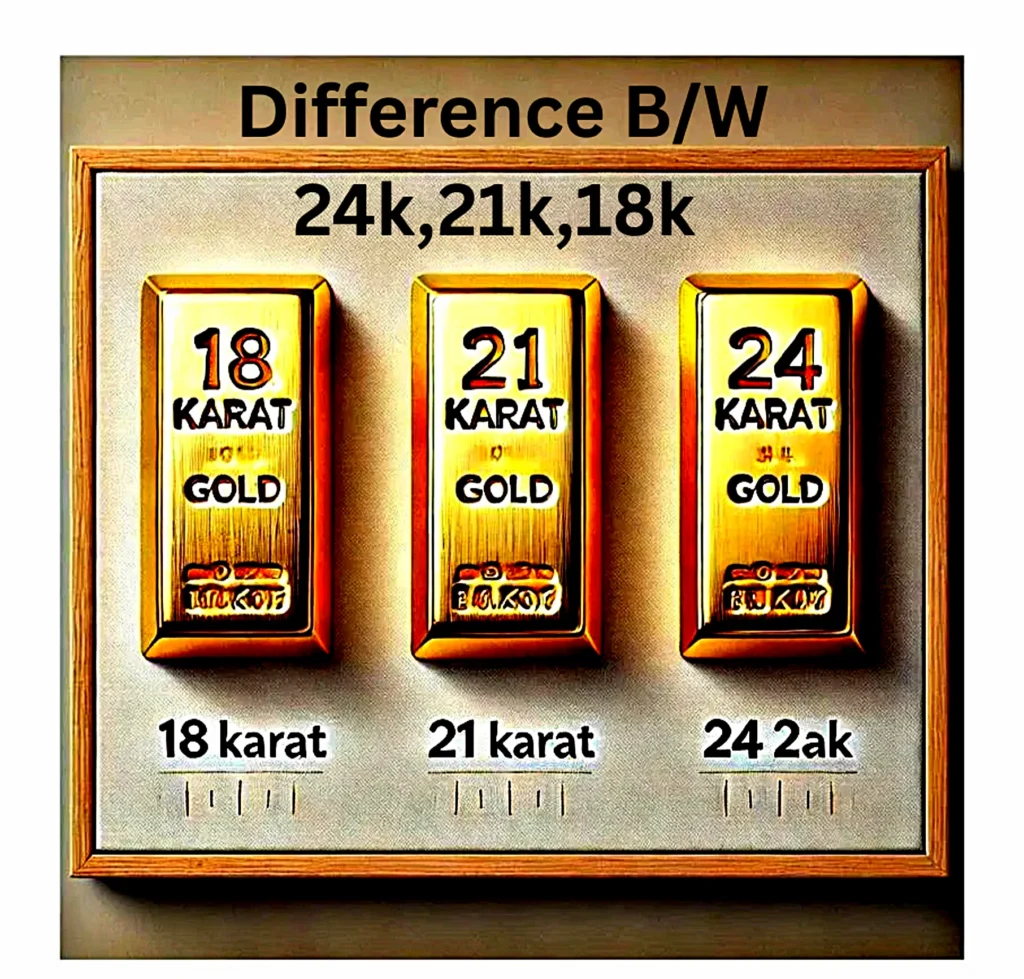
Not all gold rates are the same because not all gold purity levels are the same.
The most common types are:
Gold Karat & Purity Chart
Tap or hover a karat to see its purity and common use
Investment, bars, coins
Jewellery
Jewellery in some markets
Fashion jewellery
Tap a card to view details
24K gold is usually the most expensive because it is the purest.
22K gold is common for jewellery because it is stronger than 24K and easier to shape.
So, when checking gold prices , always check whether the rate is for 24K, 22K, 21K, per tola, per 10 grams, or per gram.
Why International Gold Rates Matter
Tracking international gold rates helps investors, bullion traders, jewellery businesses, and everyday buyers make informed financial decisions. Since local gold pricing is largely linked to the global benchmark, understanding international price movements provides better insight into expected domestic market trends. Whether for investment, wealth preservation, or purchasing jewellery, live international gold rates remain an essential financial indicator.
Tola, Gram, and Ounce Conversion Confusion
Gold is measured differently in different markets.
International markets usually quote gold in troy ounces.
commonly uses:
One troy ounce is about 31.103 grams, while one tola is about 11.6638 grams. Local gold-rate pages commonly convert global gold prices into local currencies using these measurement units.
This is why people sometimes get confused when comparing international gold rates with local gold rates.
Gram, Ounce, Tola and the Smaller Units Still Used Today
The unit a market settles on is almost always a matter of local tradition rather than anything intrinsic to gold itself, and several of these units carry centuries of history behind them.
Because a tola, a baht, and a troy ounce all describe the same physical metal at different scales, the conversion math never changes: multiply the live gram price by the relevant conversion factor, and the local unit price falls out automatically, which is exactly the calculation running behind the scenes in the widget above every time you switch units.
Gold as a Global Investment Asset
Gold’s investment case isn’t that it rises every year — it doesn’t. Its value lies in behaving somewhat independently of stocks, bonds, and any single currency, which is why it’s held as a diversification and inflation-hedge asset by everyone from individual savers to central banks. Because gold is priced in dollars but held everywhere, it also functions as a currency hedge: in countries experiencing currency depreciation, locally priced gold has historically risen even during periods when the international dollar price was flat, simply because it takes more of the weaker local currency to buy the same ounce.
This dual nature — global benchmark plus local currency exposure — is exactly why tracking both the international dollar price and your local-currency, per-unit price matters, rather than relying on just one number.
Gold Futures vs Gold CFDs: Quick Comparison
| Feature | Gold Futures | Gold CFDs |
| Market type | Exchange-traded | Broker/OTC traded |
| Ownership of gold | Usually no physical gold for retail traders, but contracts can involve delivery rules | No physical gold ownership |
| Contract size | Standardized | Flexible |
| Expiry date | Yes | Usually no fixed expiry |
| Regulation | Exchange-based | Depends on broker and country |
| Leverage | Yes | Yes |
| Cost structure | Exchange fees, broker commission, margin | Spread, overnight fees, possible commission |
| Best for | Professional, advanced, or larger traders | Retail, short-term, flexible traders |
| Transparency | High, exchange-based | Depends on broker pricing |
| Availability | Available in many regulated futures markets | Not available in some countries, including for retail traders in the US |
Frequently Asked Questions
Everything about today’s gold price, per-unit rates, and karat purity — answered.
Today’s gold price reflects the live international spot rate, which updates continuously throughout global trading hours and is shown here in real time across ounce, tola, gram, and 10-gram units.
Gold rate and gold price are generally used interchangeably, though rate often refers to localized pricing in a specific currency or region, while price more commonly refers to the international benchmark value.
Daily gold price changes stem from shifts in currency exchange rates, inflation expectations, central bank buying activity, and global economic or political developments that affect investor demand for gold as a safe-haven asset.
24K gold is 99.9% pure gold with no other metals mixed in, making it the most valuable karat but also the softest, which is why it’s mainly used for bars, coins, and investment purposes rather than daily-wear jewellery.
22K gold contains 91.6% pure gold alloyed with small amounts of other metals like copper or silver, giving it added strength and durability, which makes it the standard choice for jewellery in many markets.
The core difference is purity and durability: 24K gold is nearly pure and higher in value, while 22K gold is slightly less pure but more resistant to scratching and everyday wear, making it more practical for jewellery.
Yes, 22K gold is priced lower than 24K gold because it contains a smaller percentage of pure gold, with the price difference scaling directly with the purity gap between the two karats.
21K gold, at 87.5% purity, is a popular jewellery standard in several regional markets, offering a balance between gold content and the added strength needed for intricate jewellery designs.
Gold price per gram is derived by converting the international per-ounce spot price into grams, since one troy ounce equals approximately 31.103 grams, then adjusting for local currency exchange rates.
Gold price per tola is calculated by converting the international spot price using the standard conversion of one tola to approximately 11.6638 grams, then applying the relevant local currency rate.
Local gold prices vary because each country applies its own import duties, taxes, dealer margins, and currency exchange rates on top of the shared international benchmark price.
Gold prices typically rise during periods of high inflation, geopolitical uncertainty, a weakening US dollar, or increased central bank gold purchases, as investors turn to gold as a protective asset.
Gold prices often fall when the US dollar strengthens, interest rates rise, inflation cools, or investor confidence in other assets like stocks improves, reducing demand for gold as a safe haven.
Whether gold is a good investment depends on individual financial goals and market conditions, but it’s commonly held as a long-term hedge against inflation and currency devaluation rather than a short-term trading vehicle.
Since gold trades nearly 24 hours a day across global markets, prices can shift at any time, but volatility often increases during overlapping trading sessions, such as when European and US markets are both active.
Gold prices can change multiple times within a single hour during active trading sessions, since the metal is continuously traded across global exchanges and over-the-counter markets.
Yes, jewellers typically charge above the live market rate to account for making charges, retail margins, and design costs, while the live rate reflects only the raw spot value of the metal.
Gold is internationally priced per troy ounce in US dollars, which serves as the global benchmark before being converted into local units like grams or tola for regional markets.
Conclusion
International gold rates are useful for anyone who wants to understand the real market value of gold. They help buyers, sellers, jewellers, traders, and investors compare prices with more confidence. Since local gold rates are linked to global bullion prices, checking the international gold rate gives a clearer idea of where the market is moving.
A live international gold rate page should show prices by ounce, gram, 10 grams, and tola. It should also explain karat purity, currency conversion, and market changes in simple words. This makes the page more helpful for users and improves trust. Gold prices may keep changing, but clear and updated information helps people make better buying, selling, and investment decisions.