Gold Price in Pakistan Today: Per Tola, Gram, Ounce & Kilo
Sarafa Bazar Benchmark · APSGJA
Today’s Gold Rate in Pakistan
| Purity | Per Tola | Per 10 Grams | Per Gram |
|---|---|---|---|
| 24K Investment grade | Rs. 433,836 | Rs. 371,944 | Rs. 37,194 |
| 22K | Rs. 397,682 | Rs. 340,950 | Rs. 34,095 |
| 21K | Rs. 379,607 | Rs. 325,452 | Rs. 32,545 |
| 18K | Rs. 325,377 | Rs. 278,958 | Rs. 27,896 |
Source: APSGJA, Karachi Sarafa Bazar. Figures are the bullion benchmark — making charges (typically 1–3% on bars, 8–25% on handmade jewelry) and any applicable tax are not included and are added by the retailer.
Quick answer: Gold in Pakistan is quoted in rupees per tola (11.6638 grams), not per gram or per ounce like most international sites. That’s the biggest reason a “gold price in Pakistan” search doesn’t match a global spot chart at first glance. The rate above is updated manually each day and reflects a benchmark figure. Your actual retail price can differ by city, dealer, and purity — see “What Sets the Local Price” below.
Gold Price by Unit: Quick Conversion Table
Conversion Reference
Gold Price by Unit
| Unit | Grams | How to Calculate It |
|---|---|---|
| 1 gram | 1g | Live per-gram rate above |
| 10 gram | 10g | Per-gram rate × 10 |
| 1 tola | 11.6638g | Standard Pakistani retail unit — full breakdown → |
| 1 ounce (troy) | 31.1035g | ≈ 2.6667 tola |
| 100 gram | 100g | ≈ 8.5735 tola |
| 1 kilogram | 1,000g | ≈ 85.7353 tola |
1 tola is highlighted as the standard Pakistani retail unit — most rates you’ll see quoted locally use this, not grams or troy ounces.
Manual conversions, if you’re starting from a per-gram or per-ounce figure quoted elsewhere:
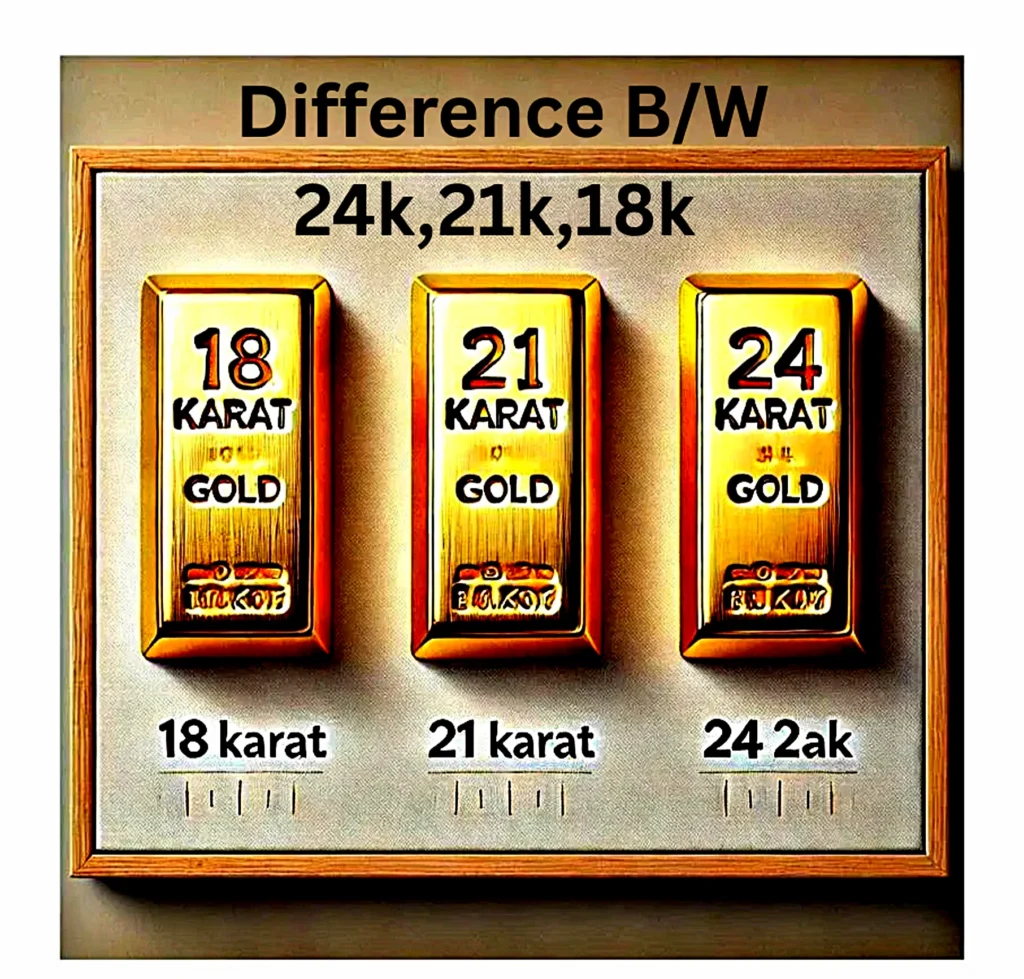
Gold Rate by Karat (Purity)
Pakistani retail rates are quoted separately by karat.
Purity Reference
Gold Rate by Karat (Purity)
| Karat | Fineness | Typical Use |
|---|---|---|
| 24K |
999.9 (99.99% pure)
|
Bars, coins, investment-grade gold |
| 22K |
~916 (91.6% pure)
|
Most traditional Pakistani jewelry |
| 21K |
~875 (87.5% pure)
|
Common jewelry alternative to 22K |
| 18K |
750 (75% pure)
|
Lighter, more durable jewelry pieces |
Fineness reflects gold content only. Retail price also includes dealer premium (bars/coins) or making charges (jewelry) — see “What Sets the Local Price” above for the full breakdown.
To estimate the underlying metal value, multiply the 24K rate by the purity percentage. This gives you the gold content only. It is not a guaranteed retail quote. Actual prices also include dealer premiums, making charges, wastage, and any stone weight. Two jewelers can quote different prices for the same karat for this reason.
What Sets the Local Price
Pakistan’s retail gold price is not a single national feed. Sarafa (jewellers’) trade bodies and major bullion markets commonly report benchmark rates in cities including Karachi, Lahore, Rawalpindi, Peshawar, Quetta, Faisalabad, Multan, Gujranwala, Sialkot, and Islamabad. Two inputs drive most of the reported rate:
- The international gold spot price — the same US-dollar benchmark used everywhere in the world.
- The USD/PKR exchange rate — since gold is priced internationally in dollars and must be converted for the local market.
Your actual retail quote can differ from the reported benchmark. Import costs, physical supply and demand, individual dealer premiums, and local taxes or duties where applicable can all add to the benchmark figure. This is why the number you see quoted and the number on your receipt are not always identical — always confirm the final price with your dealer before buying.
City-to-city variation is normal. Each Sarafa association reports its own local rate. Small differences between cities on the same day don’t indicate an error — check the rate for your specific city rather than assuming one national number applies everywhere.
Gold Rate Today by City
Karachi’s Sarafa Bazar is Pakistan’s main bullion import hub, and it sets the primary benchmark rate each day. Other major cities generally track that benchmark closely, adding only a small local premium — typically a few hundred rupees per tola — for transport cost, local demand, and dealer margin. This is why you’ll rarely see a large gap between cities on the same day.
Sarafa Bazar Benchmark · APSGJA
Gold Rate Today by City
| City | 24K per Tola | 22K per Tola (calc.) | 24K per Gram (calc.) |
|---|---|---|---|
| Karachi Benchmark | Rs. 433,836 | Rs. 397,683sourced | Rs. 37,195sourced |
| Faisalabad | Rs. 433,936 | Rs. 397,775 | Rs. 37,204 |
| Gujranwala | Rs. 434,136 | Rs. 397,958 | Rs. 37,221 |
| Hyderabad | Rs. 433,986 | Rs. 397,821 | Rs. 37,208 |
| Islamabad | Rs. 433,936 | Rs. 397,775 | Rs. 37,204 |
| Lahore | Rs. 433,886 | Rs. 397,729 | Rs. 37,199 |
| Multan | Rs. 434,086 | Rs. 397,912 | Rs. 37,217 |
| Peshawar | Rs. 433,986 | Rs. 397,821 | Rs. 37,208 |
| Quetta | Rs. 434,036 | Rs. 397,866 | Rs. 37,212 |
| Rawalpindi | Rs. 433,986 | Rs. 397,821 | Rs. 37,208 |
| Sialkot | Rs. 434,036 | Rs. 397,866 | Rs. 37,212 |
| Sukkur | Rs. 434,136 | Rs. 397,958 | Rs. 37,221 |
Karachi’s figures are the sourced benchmark (APSGJA, Karachi Sarafa Bazar). All other cities’ 24K/tola figures are also directly sourced; their 22K and per-gram columns are calculated using the standard 22K/24K purity ratio (11/12), not separately quoted per city. Confirm against your own dealer’s 22K quote if the exact figure matters for a transaction.
Karachi’s figures are the sourced benchmark;
all other cities’ 24K/tola figures are also directly sourced from APSGJA’s per-city table, but their 22K and per-gram columns are back-calculated rather than separately quoted, since no source publishes a full karat breakdown per city. Treat the calculated columns as a close estimate, and confirm against your own dealer’s 22K quote if the exact figure matters for a transaction.
Why the numbers look almost identical:
on most days, every city in this table will show the same figure or one within a few hundred rupees of Karachi’s. That’s expected, not a data error — it reflects the benchmark-and-local-premium structure described above, not twelve independently priced markets. If a city in your feed shows a large, sustained gap from Karachi, treat that as a data-quality flag to check, not a real regional price difference.
What this table doesn’t capture:
individual jeweler pricing within a city. Neighborhood-level markets — Lahore’s Anarkali or Shah Alam Market, Karachi’s Tariq Road or Saddar, Islamabad’s Blue Area — can still vary shop to shop on top of the city figure above, mainly through making charges rather than the metal rate itself.
Gold Price in Pakistan During 2018
2018 is one of the most searched historical reference points for Pakistani gold rates. That’s because the local price moved far more than the international price did that year.
According to Exchange-Rates.org’s historical data, the average 24K gold price in Pakistan during 2018 was approximately PKR 153,955 per troy ounce — about PKR 57,700 per tola, using the standard 31.1035g-to-11.6638g conversion. The year started near a low of about PKR 144,296 per ounce in January. It climbed to a high of about PKR 179,414 per ounce by December 31. That’s a rise of roughly 24.34% across the year.
That increase closely tracked the Pakistani rupee’s fall against the US dollar over the same period. The rupee lost roughly a quarter of its value against the dollar between December 2017 and December 2018, according to the All Sindh Sarafa Jewellers Association, as reported by Dawn. The currency move, more than any shift in the international gold market, pushed up the local price that year. It’s a clear real-world example of the two-input pricing relationship described above: a weakening currency alone can drive a large local price increase, even without an extraordinary global gold rally.
Buying Gold in Pakistan: What to Check
Before you buy, it helps to separate the different components that make up your final price:
Practical steps:
Common Questions
Check the live rate table at the top of this page. It’s a benchmark figure, reported per tola by default. Sarafa associations in major cities update it multiple times daily, based on the international spot price and the USD/PKR exchange rate. Your final retail price may include additional dealer costs — see “What Sets the Local Price” above.
1 tola equals 11.6638 grams, the standard weight used across Pakistani gold and jewelry markets.
1 troy ounce (31.1035 grams) equals approximately 2.6667 tola.
The average 24K gold price in Pakistan during 2018 was approximately PKR 153,955 per troy ounce, or about PKR 57,700 per tola. It rose roughly 24% across the year, driven mainly by rupee depreciation against the US dollar rather than international gold price moves. See the 2018 section above for the full explanation.
Each city’s Sarafa association reports its own local rate rather than pulling from one national feed. Small day-to-day differences between cities are normal.
No. Bars and coins are typically 24K and carry a bullion premium over the benchmark rate. Jewelry is usually 22K or 21K and carries making charges on top of the lower-purity metal value. Making charges are usually not recovered when resold.
The international spot price is the same US-dollar benchmark everywhere. Pakistan’s reported rate converts that benchmark through the current USD/PKR exchange rate, then reflects local market costs on top. Currency movements alone can push the local rate up or down, independent of the global market.
Corrections policy: if you find an error in a figure or citation on this page, contact [ livepriceofgold@gmai,comt] — corrections are reviewed and, where warranted, applied with a visible update to the “last updated” date above.
Conclusion
The Number Isn’t the Price
Gold in Pakistan isn’t priced by one simple number. The rate you see quoted is a benchmark, set daily from Karachi’s Sarafa Bazar using the international gold price and the USD/PKR exchange rate. What you actually pay depends on where you are, what karat you’re buying, and whether it’s a bar, a coin, or jewelry with making charges attached.
Step 1
Benchmark Rate
Step 2
Premiums, Making Charges & Tax
Result
What You Actually Pay
“Separate the benchmark rate from the premiums, making charges, and taxes that sit on top of it — that’s the difference between a fair price and an inflated one.”
Use the live tables above for today’s benchmark and city-by-city figures. Use the conversion table when you need to move between tola, gram, ounce, or kilo. And before you buy, do the subtraction above every time — it’s the one habit that protects you from paying more than the day’s real rate.