Gold Price Drops Below $4,000 — 8-Month Low Explained
Quick Answer
Gold has dropped to roughly $3,975 per ounce, its lowest level in eight months, as escalating tension in the Middle East pushes traders to bet the US Federal Reserve will raise interest rates later this year rather than cut them. Higher rate expectations make gold — which pays no interest — less attractive to hold, even though the same Middle East risk would normally boost demand for safe-haven assets
What’s Happening to Gold Right Now
Gold (XAU/USD) has been sliding for several sessions and has now broken below the psychologically important $4,000 mark, touching an eight-month low. On the surface, that’s unusual: gold typically rises when geopolitical risk increases, since investors treat it as a safe store of value in uncertain times. This time, though, the inflation risk tied to the conflict is outweighing gold’s usual safe-haven appeal.
Gold Price Technical Analysis (XAU/USD): Key Levels to Watch
Gold’s (XAU/USD) near-term direction now hinges on how price closes relative to the $3,942 level on the daily and weekly charts. A confirmed daily and weekly close with the candle body below $3,942 would open the door to fresh selling pressure, with downside targets at $3,890 and the $3,790–$3,800 zone; in that bearish scenario, the $4,040–$4,060 area becomes the preferred zone for fresh selling on the daily timeframe. Conversely, if gold prints a long lower wick below $3,942 but closes back above it, and the following daily candle closes above both the wick and body of that prior candle, it would signal short-term bullish momentum toward $4,100 and $4,200. However, a genuine longer-term bullish structure shift would require a full daily close with the candle body above $4,200 — until then, the broader trend remains at a technical crossroads
Technical Analysis · XAU/USD
Gold Price Forecast: What Happens Below vs. Above $3,942
Gold’s (XAU/USD) near-term direction now hinges on how price closes relative to the $3,942 level on the daily and weekly charts. A confirmed close below it opens the door to fresh selling, while a rejection and reclaim keeps the short-term bias tilted higher. Tap or hover the levels below for each scenario.
Daily & weekly candle body closes below $3,942
Confirms fresh selling pressure and a break of near-term support.
Long wick below $3,942, closes back above it
Confirmed if the next daily candle closes above both the wick and body of that prior candle.
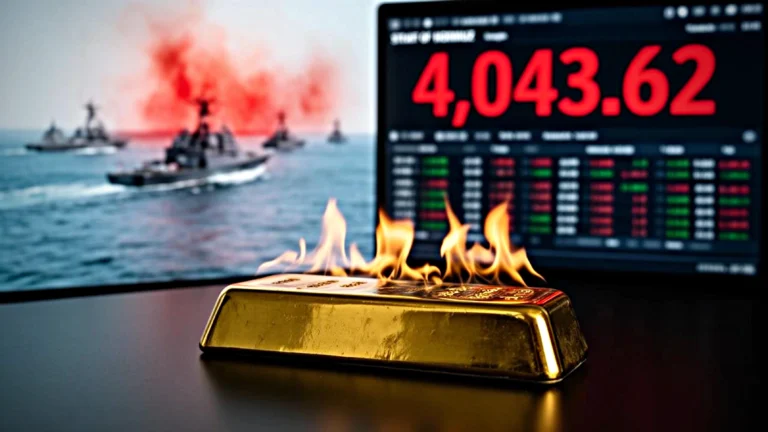
Reports indicate Iran has signaled to Yemen’s Houthi movement that it should be prepared to shut down Red Sea shipping routes if the United States strikes Iranian energy infrastructure. That warning follows a threat from the US administration to target Iran’s power grid.
A closure of the Red Sea — layered on top of existing disruption around the Strait of Hormuz — would be a serious blow to global oil supply chains. Markets are reading this as inflationary: constrained oil supply typically pushes energy prices higher, and higher energy prices feed directly into broader consumer price inflation.
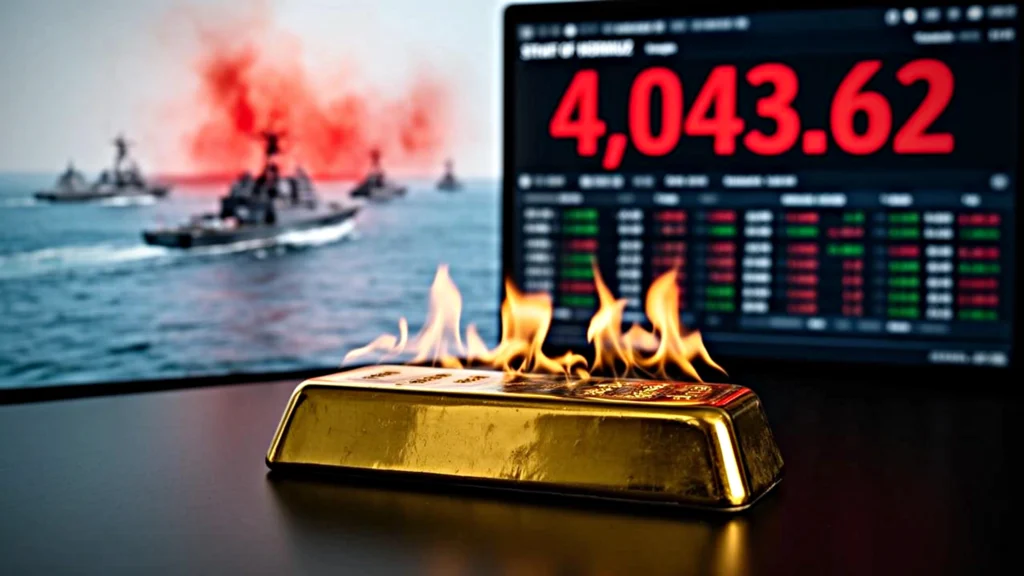
That matters for gold because it changes the interest-rate story. Instead of assuming the conflict will scare the Fed into cutting rates to support the economy, traders are now leaning toward the opposite: the Fed may need to keep rates elevated — or even raise them — to keep inflation in check. Higher rates increase the “opportunity cost” of holding a non-yielding asset like gold, which is why the metal is falling even as geopolitical risk rises.
The Fed Rate Picture
The pressure on gold isn’t only geopolitical. Recent US inflation data has been mixed:
- Consumer Price Index (CPI): cooled in June, initially seen as a positive sign for easing inflation.
- Producer Price Index (PPI): also softened, reinforcing hopes inflation pressure was fading.
Despite this softer inflation data, futures markets are now pricing in close to a 55% probability of a Fed rate hike in September, according to CME FedWatch data. That shift is largely a reaction to the Middle East-driven inflation risk outweighing the calmer domestic inflation numbers — a reminder that gold prices respond to the expected future path of rates, not just the latest data print.
Key Takeaways
What to Watch Next
Gold Price FAQs
Everything readers ask about today’s gold move
Tap a question to expand
Hover a card (or tap on mobile) to flip it
Bottom line: rates, not risk, are driving gold right now
Middle East tensions haven’t lost their power to move markets — they’ve just changed direction. As long as traders read the conflict as an inflation risk rather than a pure safe-haven trigger, gold is likely to keep trading off Fed rate expectations more than off headlines.
~$3,975/oz — an eight-month low
Possible Red Sea route closure tied to Iran-US tensions
~55% probability of a September rate hike