Live Gold Rate in Pakistan ; 24K & 22K Price Per Tola
If you’ve ever typed Live Price of Gold on Google late at night before a wedding shopping trip, or refreshed a rate page five times in one hour, you’re not alone. Gold is one of those things everyone in Pakistan cares about — for weddings, for savings, for that “just in case” feeling when the rupee gets shaky. But the rates change so often that it’s easy to feel lost. Here is the procedure to check live Gold rates.
So let’s talk about it like two friends sitting over chai. No jargon, no confusing charts, no sales pitch. Just what you actually need to know about the gold rate today in Pakistan, why it moves the way it does, and how to make a smart decision whether you’re buying, selling, or just curious.
Here’s a simple breakdown of the 1 tola gold price in Pakistan by purity, based on current market levels
Today Gold Rate in Pakistan: The Quick Answer
Now, a quick but important heads-up: gold prices move almost every single day, sometimes more than once a day. So gold price in Pakistan by the time you’re reading this, the number could be a little higher or a little lower. Think of the figures above as a solid ballpark, not the exact number you’ll see when you walk into a jewelry shop this afternoon. For the live gold price in Pakistan at this exact moment, always check a trusted local source like your city’s Sarafa Association rate sheet or a reliable rate-tracking website before you buy or sell.
Why Does the Gold Rate Today in Pakistan Keep Changing?
This is probably the question people ask the most, and honestly, it’s a fair one. One day gold is at 435,000 rupees a tola, and two weeks later it’s at 443,000. What’s going on?
It really comes down to two simple things.
1. The international gold price. Gold isn’t priced separately in every country. There’s a global rate, quoted in US dollars per troy ounce, that gets set in markets like London and New York. Right now, gold internationally is trading close to $4,150 to $4,190 an ounce, which is actually near record territory. When that global number moves, Pakistan’s local rate follows within hours.
2. The dollar-to-rupee exchange rate. This is the part a lot of people miss. Even if the international gold price doesn’t move an inch, if the rupee weakens against the dollar, gold in Pakistan gets more expensive automatically. That’s because gold is bought internationally in dollars, then converted into rupees for our local market. A weaker rupee means it simply costs more rupees to buy the same amount of gold.
So really, the gold rate in Pakistan is a mix of “what’s happening in the world” plus “what’s happening to our currency.” That’s why you’ll sometimes hear people say gold is a hedge against inflation and rupee devaluation — when the rupee loses value, gold tends to hold its worth better than cash sitting in a drawer.
A few other smaller factors also nudge prices around:
- Local demand, especially during wedding season and Eid, when jewelry buying spikes
- Import duties and taxes set by the government
- Global events like interest rate decisions by the US Federal Reserve, geopolitical tension, or big central banks buying up gold reserves
- Sarafa Bazaar association updates, since Karachi’s bullion market usually sets the tone that other cities follow
Understanding 24K Gold Price in Pakistan vs 22K, 21K, and 18K
This trips a lot of first-time buyers up, so let’s clear it up simply.
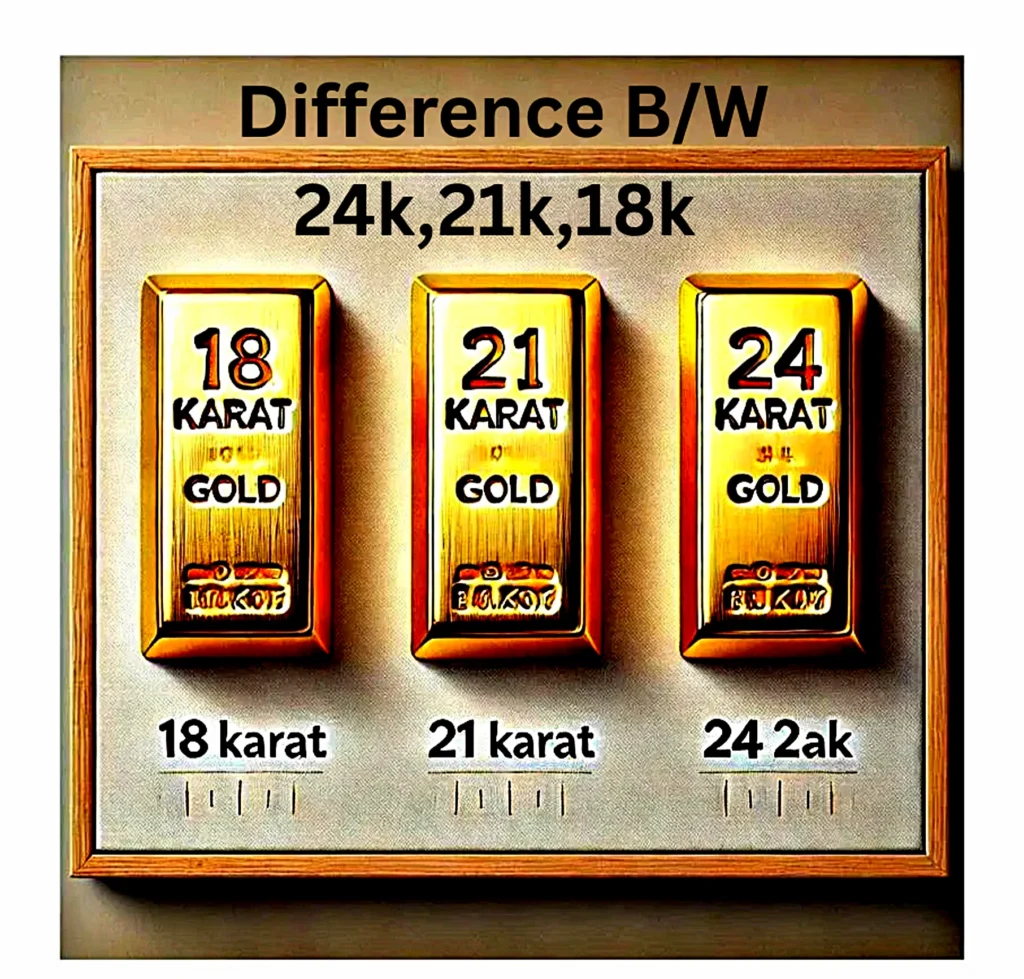
The “K” stands for karat, and it tells you how pure the gold is. Higher karat means purer gold, but also softer gold.
Karat purity guide
Hover or tap any karat for the full detail.
99.9% pure
It’s the gold you’d buy as an investment — bars, coins, or biscuits. It’s too soft to make sturdy jewelry out of, since it bends and scratches easily.
About 91.6% pure
Mixed with a small amount of other metals like copper or silver for strength. This is the standard for fine jewelry in Pakistan and India.
Around 87.5% pure
Honestly, this is the most popular choice for everyday jewelry here — rings, sets, bangles — because it strikes a nice balance between shine and durability.
75% pure
More affordable and more durable, often used in Western-style jewelry designs, but it has a slightly less rich color.
So when someone asks “which gold should I buy,” the honest answer is: it depends on what you’re buying it for. Saving money for the future? Go for 24K bars or coins. Buying jewelry to wear at a wedding? 21K or 22K makes more sense.
1 Tola Gold Price in Pakistan — Why Do We Use “Tola” Anyway?
Live price of Gold in India today “tola” might sound unfamiliar. But here, it’s the unit everyone uses at the local Sarafa market.
One tola equals 11.664 grams. It’s a traditional South Asian unit that’s been used for gold and silver trading for generations, long before the metric system became common. Even though international markets use grams and ounces, Pakistan’s local gold trade still runs on tola pricing because that’s what jewelers, buyers, and families have always understood.
Quick conversion reference
Hover or tap any card for the full detail.
1 tola = 11.664 grams
The tola is the standard South Asian gold weight unit, still widely used for jewellery and gold investment across the Gulf and South Asia.
10 grams ≈ 0.857 tola
10 grams is a common retail unit at jewellers; divide by 11.664 to see it in tola terms when comparing quotes side by side.
1 troy oz ≈ 2.667 tola
International spot gold is quoted per troy ounce (31.1034768 g). Multiply the ounce rate by 2.667 to estimate the equivalent tola price.
So if a website quotes you the price per gram or per ounce, you can do quick math to figure out what it means for a tola, which is what most local jewelers will actually quote you.
Live Gold Price Pakistan: Should You Check It Daily?
Honestly, unless you’re planning to buy or sell soon, you don’t need to obsessively track the live gold price in Pakistan every single day. That kind of habit tends to create stress rather than help you make better decisions, especially since short-term swings in gold are mostly noise.
That said, if you are close to a purchase — say, a wedding is coming up, or you’re thinking about converting some savings into gold — it’s smart to check the rate for a few days before you buy. This helps you notice the trend: is gold climbing steadily, or has it just spiked because of some short-term news event that might settle down?
Here’s a simple tip that a lot of experienced gold buyers in Pakistan swear by: check the rate in the morning before 11 AM, since that’s usually when the Karachi Sarafa Bazaar sets its opening rate for the day based on overnight international movements. Rates can shift again later if there’s major global news, but the morning rate gives you a good baseline.
How Gold Prices Are Set Across Pakistani Cities
A question people often have: does gold cost the same in Lahore, Karachi, Islamabad, and Peshawar?
Mostly, yes — with very small differences. Karachi’s Sarafa Bazaar is generally seen as the trendsetter because it’s the country’s biggest bullion trading hub. Other cities like Lahore, Islamabad, Rawalpindi, Multan, and Peshawar typically follow that same benchmark rate within the same day, sometimes with a difference of just a few hundred rupees per tola due to local transport costs or regional demand.
So if you’re comparing “today gold rate in Pakistan” between two cities and see a small gap, don’t panic — it’s usually just local market friction, not a sign that something’s wrong. If the gap is huge though (like tens of thousands of rupees), that’s worth questioning before you buy.
Gold as an Investment: Is It Actually Worth It?
Let’s be real about this instead of just hyping gold up.
Gold in Pakistan has performed remarkably well over the last several years. Back in 2021, 24K gold was trading around Rs. 100,000 per tola. Now it’s sitting above Rs. 440,000. That’s more than a fourfold increase in just a few years. A big chunk of that jump came from rupee depreciation, and a good chunk also came from the international gold rally, which has pushed prices to record highs globally in 2026.
Why people in Pakistan trust gold:
But here’s the honest downside too:
So is gold a good investment? For preserving value over the long run, especially in a country dealing with currency pressure, many financial experts consider it a smart diversification tool. But that doesn’t mean you should throw all your savings into it. A more balanced approach — some gold, some cash savings, maybe some other investments — tends to serve most families better than going all-in on one thing.
Buying Tips: How to Actually Get a Fair Deal
Practical tips, from us to you
Since we’re being real friends here — hover or tap any tip for the full detail.
Ask for the daily certified rate
Reputable jewelers display the day’s rate, usually matching the Sarafa Association’s published number. If a shop’s price looks way off from what you’ve seen online, ask why.
Get a receipt with purity mentioned
Whether it’s 24K, 22K, or 21K, make sure it’s written clearly. This protects you if you ever want to resell.
Understand making charges separately
When buying jewelry, the shop will add a labor or “making charge” on top of the pure gold rate. This is normal, but ask for it as a separate line item so you know exactly what you’re paying for the gold itself versus the craftsmanship.
Buy from certified, well-known jewelers
Especially in bigger cities, there are trusted names in areas like Saddar, Tariq Road, Anarkali, Liberty Market, and Blue Area. A little research into reviews or asking family for recommendations goes a long way.
Investing? Prefer coins or bars
Since jewelry has making charges baked in, coins and bars are a more “pure” way to hold gold value without losing money to labor costs when you eventually sell.
Don’t buy purely out of panic
If you see gold spiking suddenly because of some global news event, it’s often smarter to wait a few days rather than rushing in at the very peak.
Check the karat with a professional
If you’re buying secondhand or from a source you don’t fully trust, a quick check with a certified appraiser or hallmark verification can save you from disappointment later.
Selling Gold in Pakistan: What You Should Know
Selling is just as common a question as buying, especially when families need quick cash or want to upgrade old jewelry designs.
A few honest pointers:
A Quick Word on Gold and the Bigger Economic Picture
If you’re the type who likes to understand the “why” behind things, here’s some added context that might interest you.
Gold has been on a historic run globally in 2026, trading above $4,000 an ounce for extended periods and even touching record highs earlier in the year. A mix of factors is driving this: central banks around the world (including major ones) have been steadily buying gold to diversify their reserves, global uncertainty around trade and interest rates has pushed investors toward “safe haven” assets, and a softer US job market has made investors expect the Federal Reserve to keep interest rates friendlier, which historically tends to support gold prices since it becomes relatively more attractive compared to interest-bearing assets.
For Pakistan specifically, this global rally combines with our own currency situation. When the rupee is under pressure, our local gold price rises even faster than the international one, in rupee terms. This is exactly what’s been happening over the past few years, and it’s a big reason gold has become such a talked-about topic — even for people who never used to pay attention to commodity prices.
Gold Price in Pakistan — Frequently Asked Questions
Straight answers on today’s rate, karats, making charges, and buying gold in Pakistan.
As of the first week of July 2026, 24K gold is trading around Rs. 442,000 to Rs. 443,000 per tola. Rates shift daily, so check a live source before making a purchase.
Roughly Rs. 442,000, though this number moves with international gold prices and the dollar-to-rupee rate, sometimes by a few thousand rupees in a single day.
Mainly two reasons: gold prices have risen sharply worldwide in 2026, and the Pakistani rupee has weakened against the dollar over the past several years. Both factors push the local rate higher.
Often, yes, slightly — mainly because of lower import duties and taxes in the UAE. But once you factor in travel costs, customs limits, and currency conversion, the actual savings for an average buyer are usually smaller than people assume.
24K is 99.9% pure gold — soft, and mainly used for investment bars and coins rather than everyday jewelry. 22K contains about 91.6% gold mixed with other metals, which makes it strong enough for rings, sets, and bangles. Jewellers in Pakistan almost always quote both rates separately for this reason.
22K is slightly purer (91.6% gold) and often has a richer yellow color, while 21K (87.5% gold) is a bit more durable and slightly more affordable. In Pakistan, 21K is actually the most commonly worn jewelry karat because of that balance.
1 tola equals 11.6638 grams, usually rounded to 11.664 grams for everyday use. This is the standard weight unit at Sarafa markets across Pakistan, alongside the per-gram and per-10-gram rates jewellers also quote.
Yes. The rate you see online or in the news is for raw gold value only. Jewellers add “making charges” (ujrat) on top — typically a small percentage for bars and coins, and a much higher percentage for handmade jewelry designs. Always ask for a receipt that separates gold value from making charges.
Sales tax can apply depending on the type of purchase and the seller, particularly on making charges rather than the raw gold value itself. Since rules can change, it’s worth confirming the current tax treatment with your jeweller or a tax advisor before a large purchase.
That depends entirely on your personal goals and timeline, and this isn’t financial advice — just food for thought. If you need gold for an upcoming wedding or event, timing the market perfectly matters less than simply budgeting for it. If you’re buying purely as an investment, it can help to track the rate for a couple of weeks and buy on a dip rather than chasing a sudden spike.
Local Sarafa Association rate sheets, established financial news sites, and dedicated gold-rate tracking platforms update multiple times a day. It’s a good habit to cross-check two sources before making a big decision.
Only slightly. Karachi’s Sarafa Bazaar typically sets the benchmark, and other cities follow within the same day, usually with a gap of just a few hundred rupees per tola.
It starts with the international gold price in US dollars per ounce, which gets converted into rupees using the current USD/PKR exchange rate. Local Sarafa Associations then calculate the per-tola and per-gram rates from that number, factoring in local market conditions.
Not directly — the local rate is derived from the international price after currency conversion, so the two move together but aren’t identical numbers. A steady international price can still mean a rising local rate if the rupee weakens against the dollar.
Most local sources refresh their figures every 30 to 60 minutes during market hours, though rates can be revised more often if international prices or the exchange rate move sharply.
Yes, several banks and digital gold-saving platforms now let you buy small amounts of 24K gold over time through monthly installments, which can be a more manageable option than saving up for a full tola at once.
Always keep the original receipt showing weight, karat, and price paid. This makes reselling easier later and helps prove the gold’s authenticity and purity if ever questioned.
Conclusion
At the end of the day, gold in Pakistan isn't just a commodity — it's tradition, security, and sometimes the difference between a comfortable retirement and a stressful one. The rate will keep moving, some weeks up, some weeks down, and no one can predict it perfectly, not even the big financial institutions publishing their forecasts.
What actually helps is staying informed without getting obsessive, buying from people you trust, understanding what you're paying for (pure gold value vs. making charges), and making decisions based on your own needs rather than chasing headlines. Whether you're buying a small gold coin as a gift, saving up for a daughter's wedding jewelry, or just keeping an eye on the market out of curiosity, hopefully this guide made the whole topic feel a little less confusing and a lot more like a conversation with someone who's got your back.
Note: Gold prices in this article reflect market rates as of early July 2026 and are meant for general understanding. Always confirm the current live gold price in Pakistan with your local Sarafa Association or a trusted jeweler before buying or selling, since rates can change multiple times within a single day.